- Details
- Written by: Super User
- Category: Blog
- Hits: 798
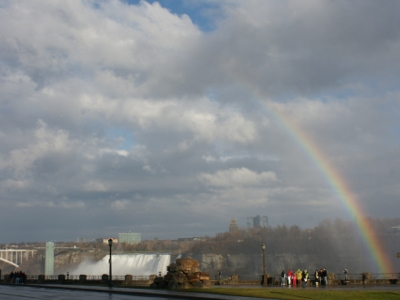
One minute its November and you’re in Niagara Falls, the next its March and you’re in Heathrow airport on your way back to Texas from the UK. Time definitely flies, as Porcupine Tree (amongst others such as Yes) remind us:
“But after a while
You realize time flies
And the best thing that you can do
Is take whatever comes to you
'Cause time flies”
So back to November 2009. Thanksgiving is a major holiday event in the US so what better way to celebrate it than a trip to Toronto, Canada, eh? (have to practice saying “eh” at the end of every sentence if you go to Canada).
Another visit to Toronto means an opportunity to see Niagara Falls at last.
Its an understatement to say Niagara Falls is big. At its peak flow it can fill three olympic swimming pools PER SECOND! But Niagara Falls is not the biggest waterfall in the world by any measure. Its not the tallest (Angel Falls in Venezuela is almost 20 times taller), the widest (Victoria Falls on the Zambia/Zimbabwe border is about 30% wider) and its flow is not the greatest (Boyoma Falls in the Republic of Congo has a peak flow three times greater!).
But still, you can’t fail to be impressed by it when you see if for real:
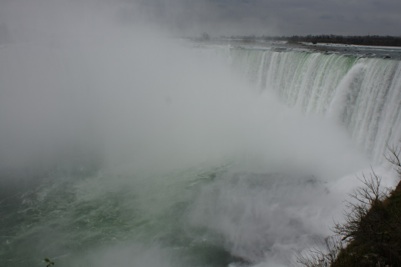
Niagara Falls actually consists of three separate falls: Horseshoe falls (above), American Falls and Bridal Veil Falls. The latter two are on the US side of the Canadian/American border but are a lot smaller than their Canadian sibling.
All that water is quite harmful though. This picture shows the change in the position of Horseshoe Falls from 1678 to 2005:
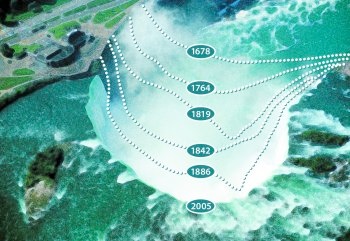
The good news for the US is that at the current rate of erosion it will be on the their side of the border in 15,000 years. Probably worth planning the tourist facilities now. As we all know, time flies...
- Details
- Written by: Super User
- Category: Blog
- Hits: 812
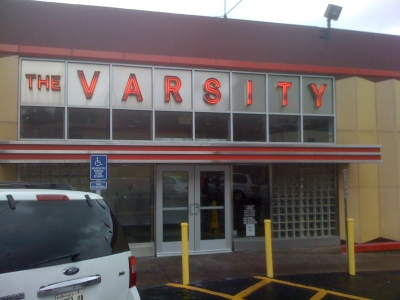
The Varsity sits on Atlanta’s Downtown Connector and is the World’s largest drive-in. The two acre site has space for 600 cars and 800 people. On football days 30,000 people visit the place.
Some other statistics about the Varsity:
They serve two miles of hot dogs...
...2,500 pounds of potatoes....
...2,000 pounds of onions....
....and 300 gallons of chili...
EVERY DAY!
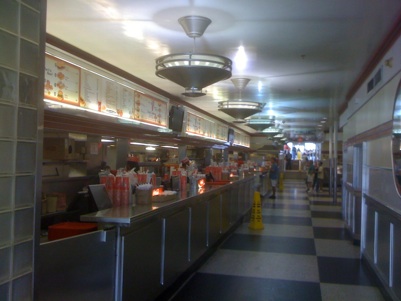
Inside you get the feel that this is a big place - Counters as far as the eye can see (this picture was taken late on a Monday afternoon so it was quiet):
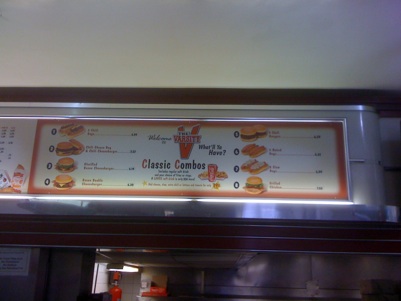
The Varsity is now over 80 years old and is such an institution in Atlanta that it has its own lingo. When you get to the front of the line the servers all ask “What’ll ya have” in a fairly direct manner (This is not a place for indecisive people). The list of choices is available in straightforward English (e.g. “hot dog to go”) or Varsity lingo (“walk the dog”). Once you’re really proficient you can order things like a “red dog, all the way sideways with a bag of rags” which, roughly translated is a plain hot dog with ketchup, onions on the side and a bag of potato chips.
For those less proficient, fortunately there’s a menu:
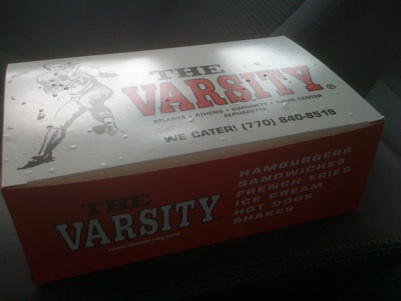
Your meal comes in a nice box which you can keep as a souvenir or use in some kind of Blue Peter project:
I went for the “hot dog, all the way and a side one”. Confusingly a “hot dog” is not a plain hot dog but one with chili and mustard on it - being health conscious I avoided the “heavy weight”, which is the same thing with more chili. Here it is in all its glory:
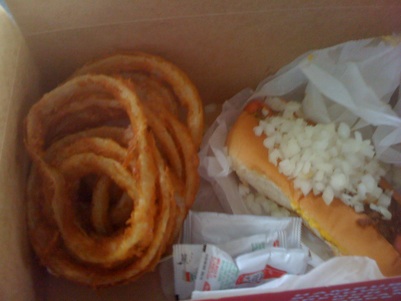
So next time you’re driving through Atlanta (or more likely stuck in traffic going through Atlanta) stop by the Varsity for a Yankee dog with strings and a squirt-one and see what you get.
- Details
- Written by: Super User
- Category: Blog
- Hits: 822
Well not quite all Summer long, but for the early part of it (Late May to the end of June) our neighborhood, along with others all across the country, is taking part in “Summer League”.
Summer League is an annual swimming competition between local neighborhoods and is open to children from 5 to 18. The neighborhoods are put into leagues based on past success and compete against each other every weekend, as well as train in the neighborhood pool during the week.
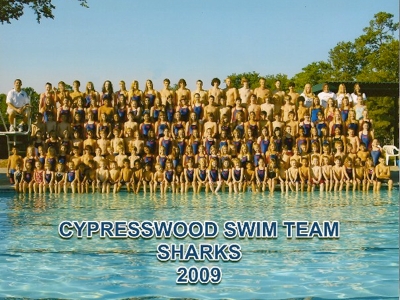
The Cypresswood Sharks celebrated their 35th year of competition this year and moved up a division to compete against teams like the Marlins, Hurricanes, Waves, Tiger Sharks and Hammerheads from places like Champions Forest and The Woodlands.
Like any sporting event in the USA, a Summer League swim meet starts (at 8am on a Saturday!) with a prayer and the National Anthem [Important note: always remember to take off your hat, face the flag and put you right hand over your heart at this point otherwise people look at you with accusing stares].
After the National Anthem it’s time for the team chant (Repeat “I said a boom chicka rocka chicka rocka chicka boom” and variations of this many times...):
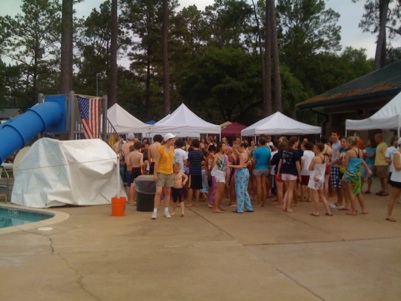
And then we’re off:
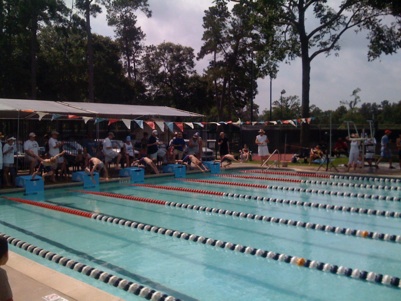
After a few Saturdays you quickly learn that having your own pagoda to sit under as 6 hours in Texas sunshine is quite hard work. However, to get a space you have turn up very early indeed. Even then limited space and many pagodas results in something akin to a Bedouin village in the desert:
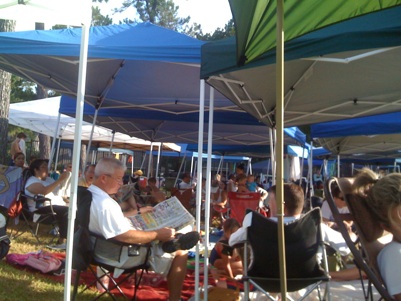
[At this point its worth noting that if you are going to try and assemble a pagoda at 7am on a Saturday in Houston in the Summer, take a change of dry clothing for afterwards, assuming you haven’t smashed it into small pieces in a heat induced rage because you can’t work how the pieces fit together.]
As well as swim training and competing the teams organize social events (including a bunk-in where all the children have a mass sleep-over in a school gym one night) and a pep rally where trucks take the team members around the neighborhood throwing out candy to people:
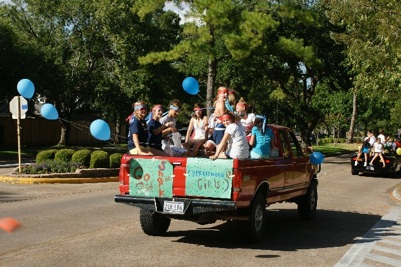
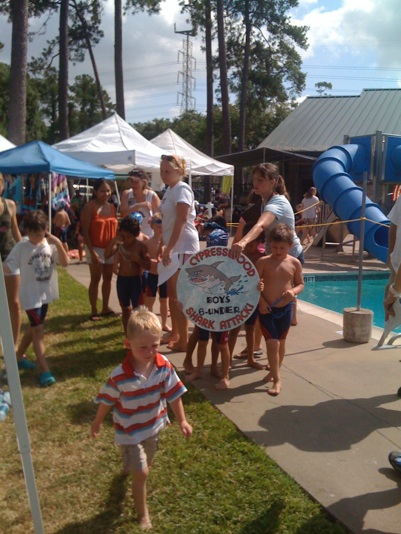
So now we know why the USA is so good at swimming. They start a lot earlier and get a lot of competition experience before UK children have removed their armbands. Here are the 6 and under children lining up for one of their events:
- Details
- Written by: Super User
- Category: Blog
- Hits: 854
If you drive through the desert across Northern Arizona, Nevada and California you might wonder why some places, such as Williams, Seligman, Kingman, Needles and Barstow came to be. After all, there’s literally nothing around them and they aren’t exactly the most hospitable places to live. A lot of places out in the desert were founded as mining towns. One example of a mining town is Oatman, Arizona. Here’s the Olive Oatman Restaurant & Saloon:
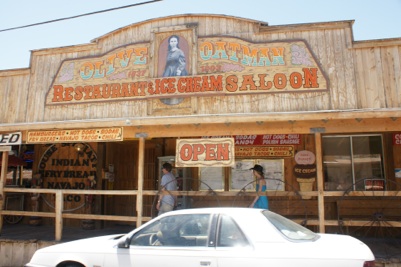
Olive Oatman, by the way, was an Illinois woman who in 1851 was abducted at age 13 by Native Americans (“Red Indians” for those of you whose American history was taught by John Wayne) and forced into slavery. Six years later she was traded by the Native Americans for horses and blankets and Oatman the town stands near where she was released.
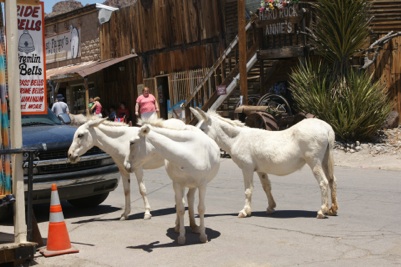
Today Oatman is a tourist town which has a population of burros (wild donkeys) that roam the streets. Other than the modern tourist cars it doesn’t look much different to how it must have been 150 years ago:
But that’s an old mining town. Back to those other places. Having just read Lesley Poling-Kempes’ excellent book “The Harvey Girls: Women Who Opened The West” it would appear that places like Williams, Seligman, Kingman, Needles and Barstow all date back to the old Santa Fe Railway and were regular stops for travelers back in the heyday of rail transport.
The history of the Santa Fe Railway is a story in itself but, in a nutshell, Cyrus K Holliday and his successors in the Atchison, Topeka and Santa Fe Railway built, from the 1860s to the 1890s, a rail network from Chicago to Los Angeles, San Diego and San Francisco, with routes down to Houston and up to Denver.
And this is where our towns come into the story. The establishment of a station, depot or junction point in the railway was followed by the establishment of a town for the people servicing the Santa Fe.
In the early days of rail travel the long journey was punctuated by short stops (20 minutes) at these towns for food which would make the old British Rail food seem respectable: “ ...eggs were shipped from back East, preserved in Lime...” and “chicken stew of prairie dogs was not uncommon” (presumably the origin of the phrase “tastes like chicken”?).
Scams were established where food was ordered at the station and just before it arrived passengers (who had already paid) would be called back on the train. The food would be served to another customer later and the profits shared between the station and train staff.
This all changed in 1878 when an Englishman came along (of course). Fred Harvey from London opened a dining room at the Florence, Kansas, Santa Fe stop. This quickly grew into an entire network of restaurants and hotels, known as Harvey Houses, all across the Santa Fe network.
Fred Harvey revolutionized restaurant and hotel services on the railroad with high standards and competitive prices. Here’s a menu from the Alvarado Harvey House in Albuquerque, New Mexico dating back to 1929:
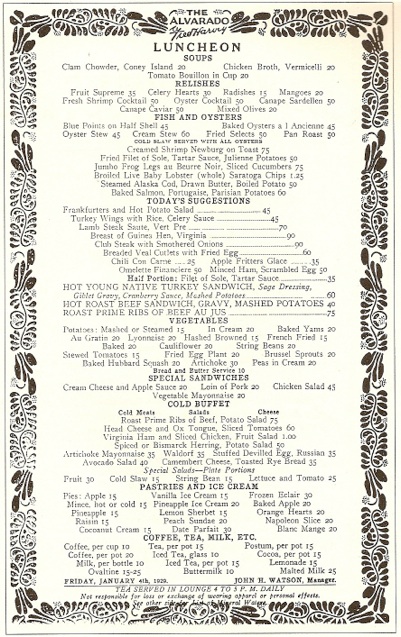
Just to clarify, the amounts are in cents, not dollars!
Fred Harvey recruited young women from the East to work in the Harvey Houses. These women lived in the Harvey House they worked in, were made to live by strict curfews and were not allowed to marry for the first 6-12 months of their contract. The Harvey Girls, as they became known, are credited with taming the wild west. Before the Harvey Girls, the quote “No ladies west of Dodge City and no women west of Albuquerque” was very true - the only women worked in the oldest profession in the world and, in rare cases, as school teachers.
The Harvey House system started to decline during the depression and then made a brief comeback providing food for soldiers during the Second World War. In 1944 a film called “The Harvey Girls” was made (starring Judy Garland).
The growth of the car travel hit the Santa Fe badly and by 1950 almost all the locations were closed. A few remained open and indeed are still open today. Here is El Tovar at the Grand Canyon:
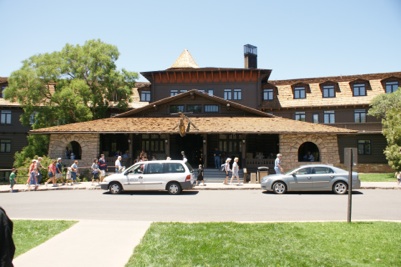
A company called Xanterra now owns the Harvey name and runs places like El Tovar (as well as facilities at most of the US national parks).
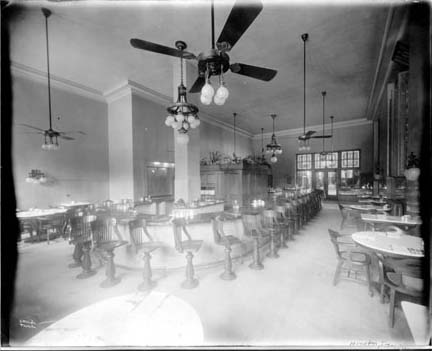
Back now to Houston: The Houston Harvey House was opened in Union Station in 1911. It closed in 1948. This is how the dining room looked back then:
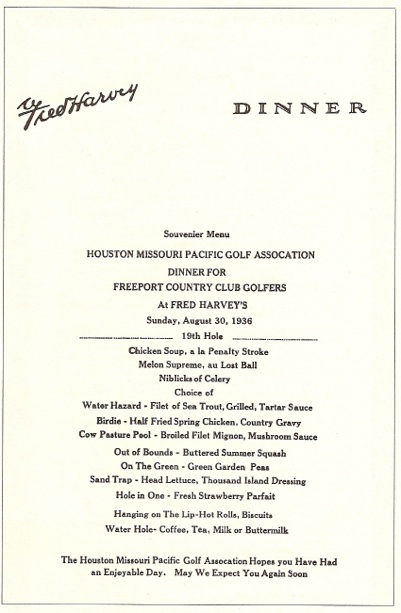
And here’s a menu from that very dining room in 1936:
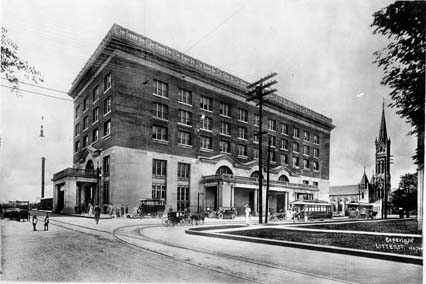
Here’s how Union Station looked from the outside:
Today Union Station is no longer a train station, although from the outside it doesn’t look much different:
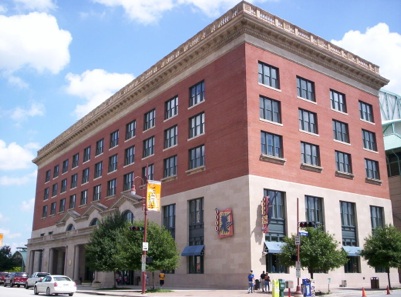
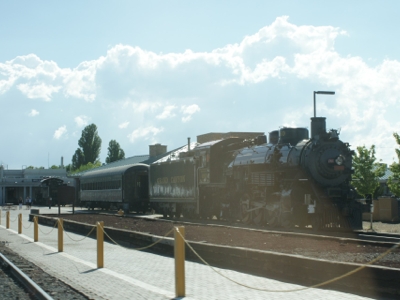
In fact it is now part of Minute Maid Park, home of the Houston Astros Major League Baseball team since 2000. As a reminder of its past, the stadium has a train that goes backwards and forwards during the game:
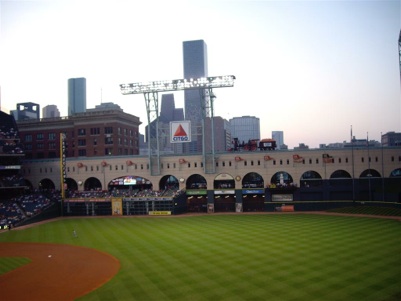
I wonder what Fred Harvey would make of the food, the service and the cost at one of his old Harvey Houses....
- Details
- Written by: Super User
- Category: Blog
- Hits: 838
When Herman Rarebell wrote the lyrics to “Arizona” on the Scorpions classic 1982 album “Blackout” he was thinking of the wild times he had with drink, drugs and women while he was there. I’m not sure he spent much time in the desert in Northern Arizona as the chances of finding any of those three is extremely unlikely.
Northern Arizona is full of interesting things. To start with Route 66, the famous “America’s Main Street’ that ran from Chicago to Los Angeles until the 1980s can still be found (in parts). One part goes from Kingman:
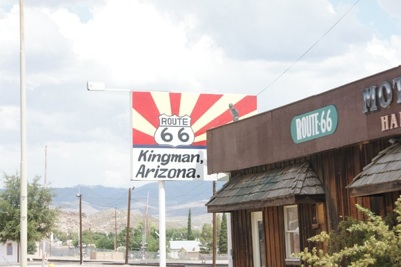
to Seligman:
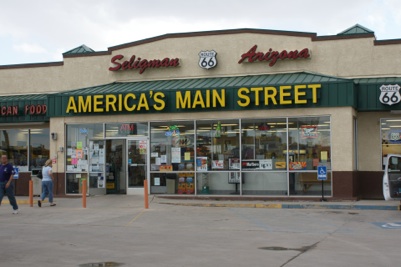
Now there’s not much to see along this bit of Route 66. One thing you will see is signs like this:
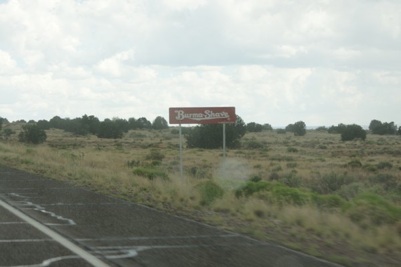
This is the last of a group of signs spaced about 100 yards apart that said:
At intersection
Look each way
A harp sounds nice
But it's
Hard to play
Burma-Shave
These signs for Burma Shave (shaving cream of course) were very common for many years on roads like Route 66. They disappeared as higher speed highways started to become more common. These ones are not originals though, as back then Burma Shave considered there to be too few drivers in Arizona to warrant advertising like this.
One very famous bit of Northern Arizona is the Grand Canyon. A great place to stay if visiting the Grand Canyon is Williams. Williams dates back to 1881 and hasn’t changed much since then.
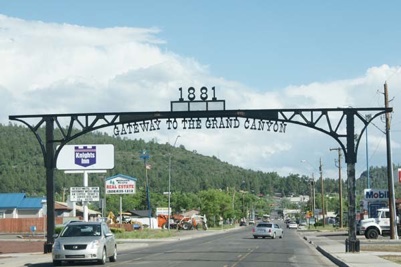
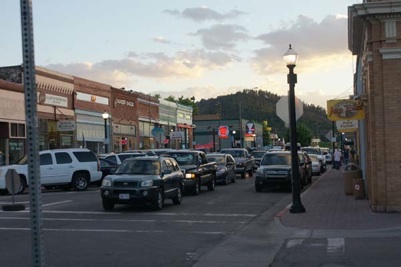
This was the last place on Route 66 to be bypassed (in 1984). Here is a bit of Route 66 in Williams as it looks today:
Williams is home to the Grand Canyon Railroad which provides a 65 mile service to the South Rim of the Canyon:
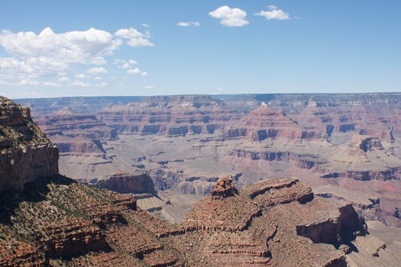
The Canyon was carved out by the Colorado river, which we have already seen back at the Hoover Dam. You can’t see it here because its too far down.
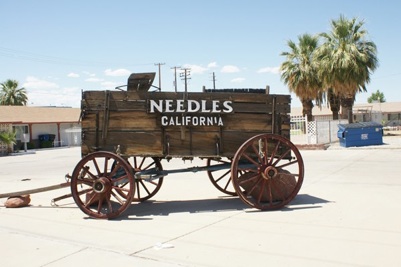
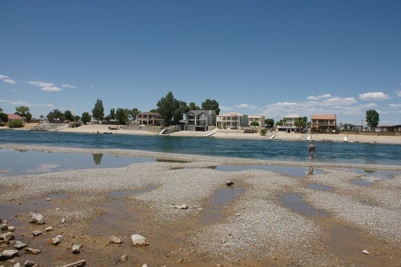
However, if you travel back into California you can get a great view of the river from another old Route 66 place, Needles:
Here you can sere the effect of the Hoover Dam on the quality of the water. Without the dam this river would be a muddy red color (Rio Colorado or Red River was once its full name). Now its crystal clear. It still moves very fast though, so no quick dips here (unless you want to end up in the Bay of California).
- Details
- Written by: Super User
- Category: Blog
- Hits: 851
“...And the sky with no clouds
The heat was hot and the ground was dry...”
Dewey Bunnell was thinking of Arizona and New Mexico when he wrote “Horse With No Name” for America (the band not the country). However, he could have easily been referring to California or Nevada.
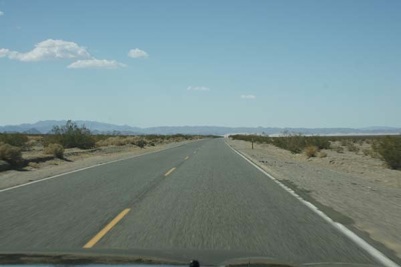
Not long after you head east out of the concrete jungle of Los Angeles you are in the desert (the Mojave desert to be precise) with very few roads and even fewer cars. Like this:
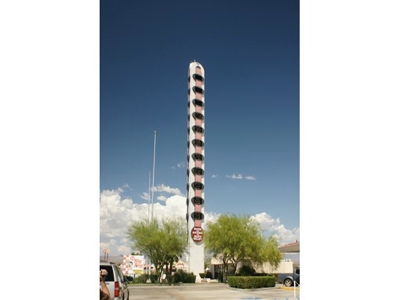
After a lonely few hours you’ll come to Baker, famous for having the World’s tallest thermometer (as shown above - only 104 F on this particular day - bring a sweater).
Not much else happens in Baker, but just outside is an interesting sign:
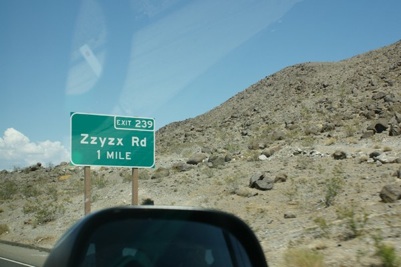
Those of you who are Stone Sour fans will recognize this as the title of a track from their second album.
Zzyzx, California is a real place, so named so it would appear last in any list of place names. In keeping with the rest of the Mojave desert, there’s not much here. These days there’s a research station called the Desert Studies Center and that’s about it.
After a few more hours heading north from Baker, you’ll enter Death Valley. This monument commemorates the route out of the valley found by Harry Wade and the Bennet-Arcane party after they got lost on their way through from Salt Lake City to California during the gold rush era:
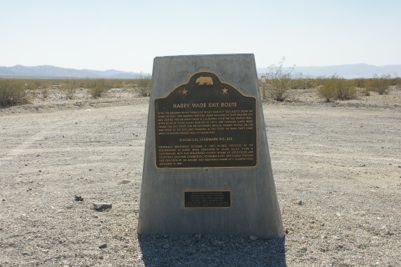
The story goes that a woman in the party said “Goodbye Death Valley” as they finally got out and that’s how it got its name.
Heading east out of Death Valley and after some more lonely driving you’ll eventually come to Pahrump, Nevada. It has two obvious claims to fame:
1.Location of the nearest legal brothel to Las Vegas.
2.One time residence of Michael Jackson and his three children.
Here’s something you probably only see in Pahrump: a man walking his goat:
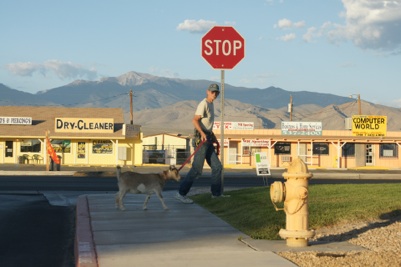
The goat’s name was “Bambi”.
Drive east for a little while longer and you arrive in Las Vegas:
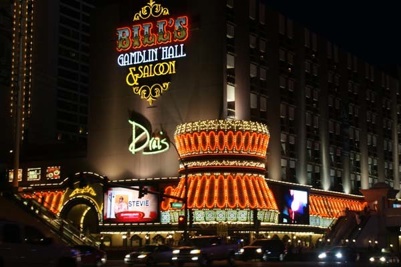
The most unusual thing about Las Vegas is its famous welcome sign:
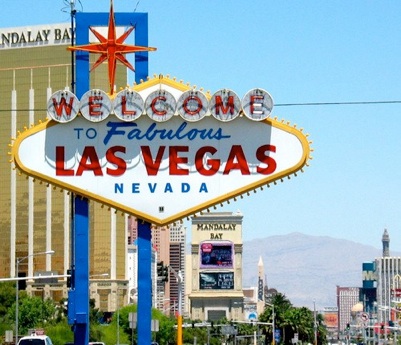
Parking is provided to allow people to take pictures here. The odd thing is that the parking is only accessible as you leave Las Vegas!
Drive south from Las Vegas and you quickly find yourself in Boulder City with a great view of Lake Mead:
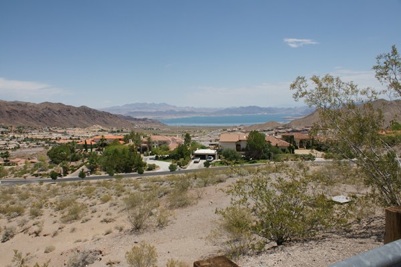
Boulder City was created back in the 1930’s to house the workers building this:
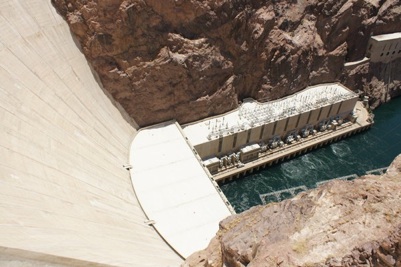
The Hoover Dam (very nearly called the Boulder Dam due to some petty behavior by people who didn’t like Mr Hoover) was at its time the largest concrete structure in the World. In fact the plans required the Government to use more concrete than had been used to build all the dams in the US before that point.
Built to control the unpredictable Colorado river, control silt build up, provide a source of water and to provide power to locations as far away as Los Angeles, the dam was opened in 1936.
Aside from being an incredible feat of engineering (many of the methods used had never been tried before this) it is also an incredible project success, coming in under budget and almost 2 years early.
The Hoover Dam currently provides road access across the Colorado river from the Nevada to the Arizona side.
A new bypass is being built which will provide an alternative route across the river. here’s how it looks at the moment:
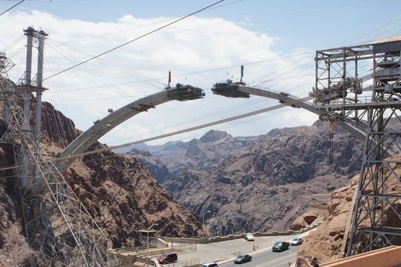
The Hoover Dam bypass is due to open in 2010, two years later than originally planned. Sadly, project successes such as seen with the original dam project don’t seem to happen these days.
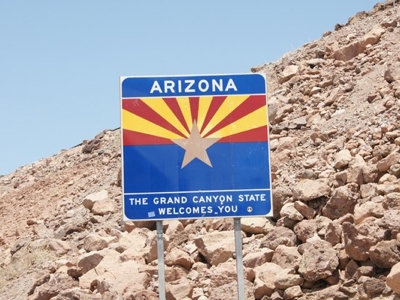
Once across the Hoover Dam you’re into Arizona, and the desert continues...